We see you.
You’ve been told — gently, repeatedly, often by people who love you — to look on the bright side. To be grateful. To focus on what you can control. To stop letting it get to you.
And underneath all that advice is an assumption you never agreed to:
That your difficult emotions are a problem — and that it’s your job to solve them.
We’d like to offer a different idea.
Not every feeling is a task.
Some emotions are not problems to be solved. They’re messages to be received — and sometimes, simply company to be kept.
1. “Getting better” is not a moral obligation
Self-improvement culture has quietly turned healing into a performance metric. Are you meditating? Journaling? Seeing progress? Getting better?
But real emotional life doesn’t move in a straight line, and treating it like a project adds a second layer of pain on top of the first: the pain itself, and then the shame of not having fixed it yet.
Some feelings are slow. Some are seasonal. Some come back. None of that means you’re failing.
2. The urge to fix is often about us, not them
Here’s an uncomfortable truth we’ve learned: when we rush to fix someone else’s sadness, it’s frequently because their pain is making us uncomfortable.
Watching someone suffer activates something in us that wants relief — and we mistake that urgency for their need. But often, the person in front of you doesn’t need you to remove the feeling. They need you to not be frightened by it.
Staying is harder than fixing. And it’s much closer to love.
3. Emotions are information, not malfunction
Anxiety is often caring that has nowhere to go. Anger is frequently a boundary that got crossed. Sadness is usually love with nowhere to put itself. Grief is the shape that love takes when someone is gone.
These aren’t bugs in the system. They’re the system working — telling you something matters, something was lost, something needs attention.
When you treat them as messages rather than malfunctions, the goal shifts. You stop asking “How do I get rid of this?” and start asking “What is this trying to tell me?”
What we actually believe at RisUni
We make objects for people who are feeling things. So we want to be honest with you about what they are and what they aren’t.
We don’t sell anything that will make you stop feeling sad.
We make things to keep you company while you do.
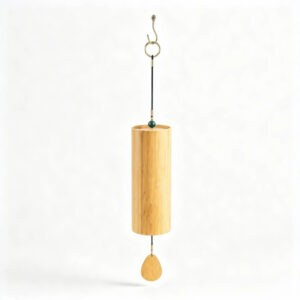
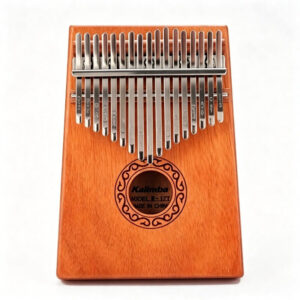
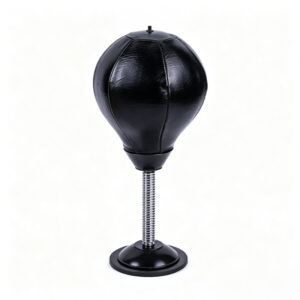
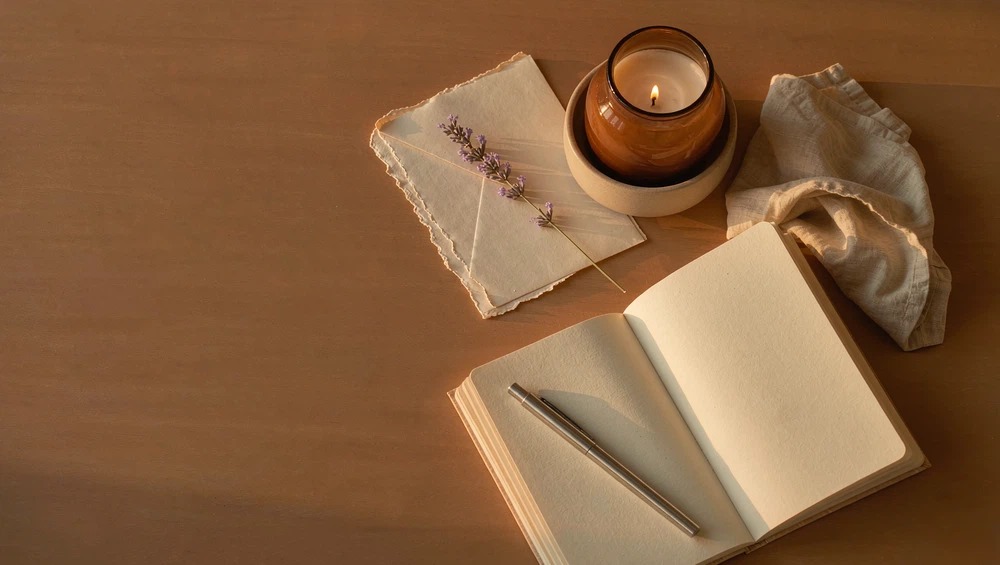
That’s the whole idea. A candle that makes the hard evening slightly softer. Something with weight in your hands when your thoughts won’t slow down. A sound that fills the silence without demanding anything from you. And sometimes, something for your hands to make — but more on that in a moment.
These aren’t treatments. They’re companionship in physical form — small, tangible reminders that you’re allowed to be where you are, and that you don’t have to go through it empty-handed.
Making something with your hands
Everything we’ve described so far works by being received — a scent you breathe in, a sound you listen to, a weight you feel. That’s most of what we make.
But there’s another kind of comfort that runs in the opposite direction. It comes from making something.
When your hands are occupied with something real — kneading dough, shaping a loaf, dusting flour — your attention gets pulled out of your head and back into your body. You cannot properly ruminate while you’re kneading. The rhythm takes over. Your breathing slows to match your hands. And when you’re done, there’s something in front of you that didn’t exist an hour ago.
That last part matters more than it sounds. On the days when you feel like you’ve produced nothing, achieved nothing, and have no evidence that the day was worth anything — a loaf of bread is a small, honest piece of proof. You made this. It’s warm. It exists.
We’re not going to call it therapy, because it isn’t. We’ll just say this: some feelings loosen their grip when your hands are busy with something real. And making food — the oldest thing hands do — seems to do it better than most.
This one works by a different mechanism than everything else we make. It doesn’t comfort you through your senses at all. It simply gives your hands somewhere useful to go — and leaves you with something warm to show for the time.
You’re allowed to just be here
So if you’re reading this while carrying something heavy: you don’t owe anyone progress. You don’t have to have learned the lesson yet. You don’t have to be grateful for it, or strong because of it, or better because of it.
You’re allowed to simply be where you are today.
And if you’d like some company — ours is always here.